
The Morning It Won't Budge
It usually happens on the first genuinely cold morning of the year. You hit the opener button on your way to work and the door groans, jerks, and stops halfway — or it opens fine but won't seal flush against the slab anymore, leaving a cold draft running across your feet while you load the car. Nothing broke overnight. The door just met winter, and winter in this part of Ohio is not gentle on garage doors.
Between the hard freezes, the road salt tracked in on tires, and the big swings between a 50-degree afternoon and a 15-degree night, a garage door that was running fine in October can start showing problems by December. The good news is that most of what causes those problems is preventable with an hour of attention before the real cold sets in.
Check the Weatherstripping While You Still Can
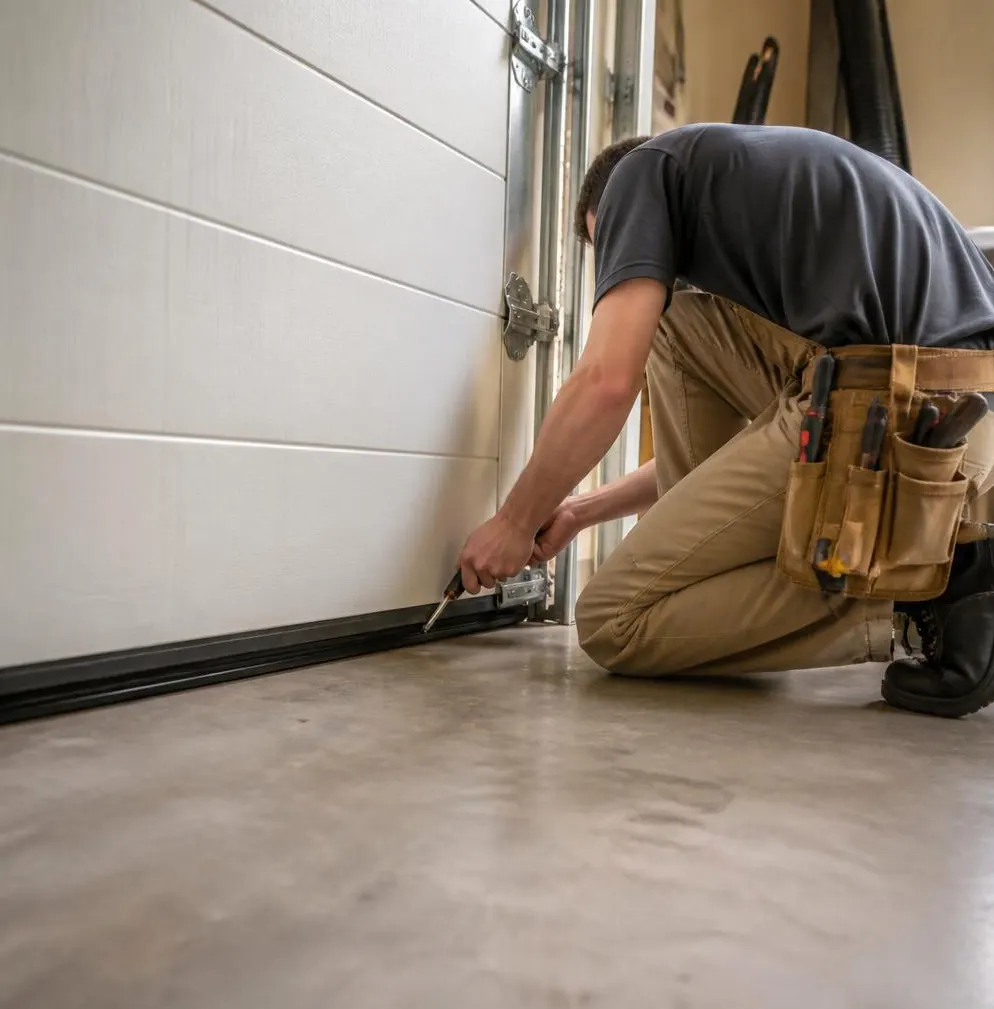
The rubber seal along the bottom of the door and the vinyl strips along the sides do more work in winter than any other time of year. Cold makes rubber stiffen and crack, and once it's brittle, it stops doing its job right when you need it most. Walk around the door and look for gaps, flattening, or spots where the seal has pulled away from the track. If you can see daylight at the bottom corners or feel air moving through on a windy day, the seal needs replacing before temperatures drop further — not in January when the old one finally gives out and you're dealing with it in the cold.
Clean the Track Before Salt and Grit Build Up
Every winter, cars pull into the garage carrying road salt, sand, and slush on the tires, and a surprising amount of it ends up in the tracks and on the rollers. Salt is corrosive, and once it sits in a track through repeated freeze-thaw cycles, it accelerates rust on the rollers and hinges — the kind of rust that eventually affects how smoothly the door travels, not just how it looks. Wipe down the tracks with a damp cloth, then a dry one, and keep an eye on buildup through the season rather than waiting until spring cleaning.
Lubricate the Moving Parts — With the Right Product
Cold makes metal contract and grease thicken, which is why doors that ran quietly all summer suddenly start squeaking or binding in winter. A silicone-based garage door lubricant (not household oil, not WD-40 as a long-term fix) on the rollers, hinges, and the spring itself will keep things moving smoothly even when the mercury drops. Do this in fall rather than waiting for the first freeze; it's much easier to work the lubricant in while parts are still moving freely than after they've already started sticking.
Look Hard at the Springs
Springs are under constant tension, and cold metal is more brittle than warm metal. A spring that's been slowly wearing out all year is more likely to finally snap on a cold morning than a mild one, because the metal has less give. Signs of a spring on its way out include a door that feels heavier than usual when lifted manually, a visible gap in the coil, or a loud bang from the garage that didn't come from anything falling. Spring replacement isn't a DIY project — the tension involved can cause serious injury — but knowing the warning signs before winter means you're not caught dealing with a broken spring and a car trapped inside during a cold snap.
Test the Opener and the Battery Backup
If your opener has a battery backup, this is the time of year to check it. Winter storms bring power outages, and a dead backup battery means a manual release and a hand-lifted door at exactly the moment you don't want to be standing outside in the cold fumbling with a release cord. Test the opener's force settings too: cold can make a door feel heavier, and if the opener is straining or reversing unexpectedly, the auto-reverse sensors or force settings may need adjusting before they're working overtime in January.
Clear the Sensor Path
The photo-eye sensors near the bottom of the track are sensitive to dirt, cobwebs, and condensation — and winter brings all three. Fogged-over sensors can cause a door to refuse to close or reverse for no obvious reason. A quick wipe-down and a check that both sensors are aligned and lit solid (not blinking) takes two minutes and saves a frustrating troubleshooting session later.
When to Call Beachwood Garage Door Co
Some of this is a weekend-afternoon job. Some of it isn't. If the door is dragging, if you hear grinding or popping from the spring area, if the weatherstripping is too far gone to simply swap yourself, or if the opener isn't responding to force or sensor adjustments, that's when it's worth having someone look at it before winter, not during an emergency in it. Our Garage Door Maintenance visits cover the track, rollers, springs, and opener in one pass, and if something is already close to failing, our Spring Replacement service handles it safely with the right tools and tension equipment — not a ladder and a wrench on a Saturday morning.
If you're in Beachwood, Shaker Heights, Pepper Pike, or anywhere nearby and want your garage door checked before the next hard freeze, call Beachwood Garage Door Co. We'll get it running right so it stays that way all winter.