
Short answer: no, it's not just cosmetic
If there's rust bubbling on a steel door or a wood panel that won't sit flush anymore, that's not just an eyesore you can ignore until spring. Moisture damage on a garage door is structural, not decorative. It spreads, it weakens the panel, and it gets more expensive to fix the longer it sits. If one of you has been saying "it's fine, it's just surface rust" and the other wants it dealt with now, the one pushing to deal with it now is right.
Why this happens here specifically
Northeast Ohio is rough on garage doors in two opposite ways. Summers are humid, which means condensation forms on the inside of steel doors even when it's not raining — moisture in the air meets a cooler metal surface and beads up, especially in an unheated, uninsulated garage. Winters bring ice, snow, and road salt that gets tracked in on tires and boots, then sits against the bottom of the door and the tracks. Add spring storm season with wind-driven rain hitting the door face directly, and you've got a door dealing with moisture almost year-round, with big temperature swings that make steel expand and contract and make wood swell and shrink.
Steel doors vs. wood doors
The symptoms look different depending on what the door is made of:
- Steel doors: rust usually starts at the bottom panel, around seams, or near the hinges — anywhere water collects or paint has chipped. Once rust gets under the paint layer, it spreads underneath where you can't see it until the metal bubbles or flakes.
- Wood doors: moisture causes swelling, not rust. A swollen door may drag on the frame, stick when opening, or look slightly warped along one edge. Left alone, wood can rot at the bottom corners where it sits closest to the ground and catches runoff.
What to actually check before you argue about it
- Bubbling or flaking paint, especially along the bottom panel
- Orange-brown streaks running down from hinges, screws, or seams
- A door that used to close flush but now leaves a gap or drags at the bottom corner
- Soft or spongy wood at the base of a wood door — press it with a thumb
- Rust on the torsion spring or the tracks, which affects how smoothly the door moves, not just how it looks
What makes it worse
A few things speed this up without people realizing it: gutters that overflow right above the garage door, sprinklers that hit the door face, no drip edge or weatherstripping at the bottom to shed water, and road salt that isn't rinsed off after a winter storm. None of these are dramatic on their own, but they add up fast over a few seasons of Ohio weather swings.
Repair, repaint, or replace — the real trade-offs
Surface rust caught early can be sanded down, primed, and repainted, which is cheap and buys real time if the metal underneath is still solid. Once rust has eaten through the metal or a wood panel has soft, rotted sections, patching it is a short-term fix at best — the damage is already structural and it will come back. A single damaged panel can sometimes be replaced without redoing the whole door, which is worth asking about before assuming you need a full replacement. But if multiple panels are affected, or the door is older and was already due for an upgrade, a full replacement is often the better long-term value than chasing rust spot by spot for another few years.
Keeping it from happening again
- Rinse salt residue off the bottom of the door and the tracks after winter storms
- Check and replace bottom weatherstripping once it cracks or flattens out — it's a cheap part that does a lot of work keeping water out
- Touch up chipped paint on steel doors before it has a chance to rust underneath
- Make sure gutters and downspouts are actually directing water away from the garage, not dumping it right in front of the door
When to call Beachwood Garage Door Co
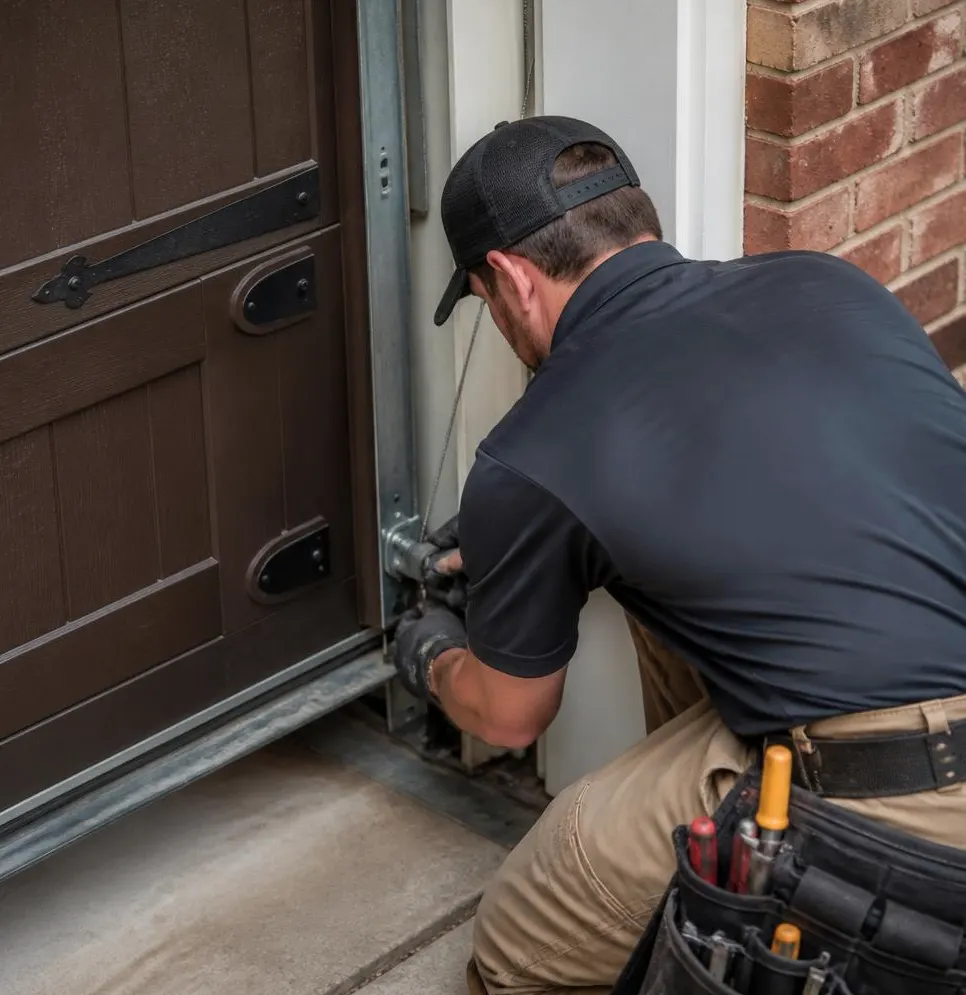
If you're seeing rust spreading past the surface, a door that's dragging or not sealing flush, or you just want an honest read on whether it's a repaint-and-move-on situation or something bigger, that's exactly what we look at during a Garage Door Maintenance visit. If the damage has gone past the point of a simple fix, we'll walk you through repair versus Garage Door Installation options without the upsell — just a straight answer so you two can stop arguing about it.
Give Beachwood Garage Door Co a call and we'll come take a look, no guesswork, no surprises — serving Beachwood, OH and the surrounding Cleveland suburbs.