
The Mistake Most People Make First
It's 6 a.m., it's fifteen degrees out, and your garage door won't move. The instinct is to mash the opener button a few more times, or to grab the bottom edge and yank. It's tempting because it feels like it should work — the door looks intact, nothing is obviously broken, so a little extra force seems reasonable.
That extra force is exactly what turns a five-minute fix into a repair bill. Repeatedly hitting the opener button while the door is stuck can strip the drive gear or burn out the motor. Yanking on a door that's frozen to the slab can bend the bottom panel, pull a hinge loose, or snap an already cold-stiffened spring. The door isn't being stubborn — something specific is stopping it, and finding that thing takes about the same amount of time as forcing it does.
What a Frozen or Sluggish Door Actually Looks Like
- Won't lift at all, and the opener motor hums or strains without the door moving.
- Lifts an inch or two and then stops, as if something is tearing along the bottom edge.
- Opens, but slowly and unevenly, with visible jerking at the rollers.
- Reverses on its own partway up, which usually points to the opener's force settings reacting to resistance.
- Opener remote works fine on other days but the door feels heavier than normal only in cold snaps.
Each of these points to a different culprit, and a technician would check them in a specific order — cheapest and most obvious first.
1. Ice Bonding the Door to the Floor
This is the first thing to rule out, and it's the most common cause after a freeze-thaw cycle. Melted snow, slush, or road salt brine dripping off a car overnight can pool under the door and refreeze by morning, gluing the weatherstripping to the concrete.
The fix: Don't pry it — score along the seam with a flat tool or pour warm (not boiling) water along the bottom edge to break the bond, then try the door again. If this is happening repeatedly, the slope of the slab or a worn bottom seal that's letting water pool is the real issue, and that's a seal replacement, not a one-time thaw.
2. Weatherstripping Stuck to the Track
If the door lifts but immediately binds a few inches up, check the vinyl weatherstripping along the sides. In cold, stiff rubber can catch on the track or on built-up grime, especially if it was already slightly worn.
The fix: Inspect the seal for cracking or stiffness. A seal that's cracked or hardened needs replacing before it causes a bigger jam; this is inexpensive and straightforward.
3. Lubricant That's Thickened in the Cold
Grease and oil behave differently at 20°F than they do at 70°F. Lubricant that was fine all summer can turn gummy in winter, adding drag to rollers, hinges, and the track itself. This often shows up as a door that's merely sluggish rather than fully stuck.
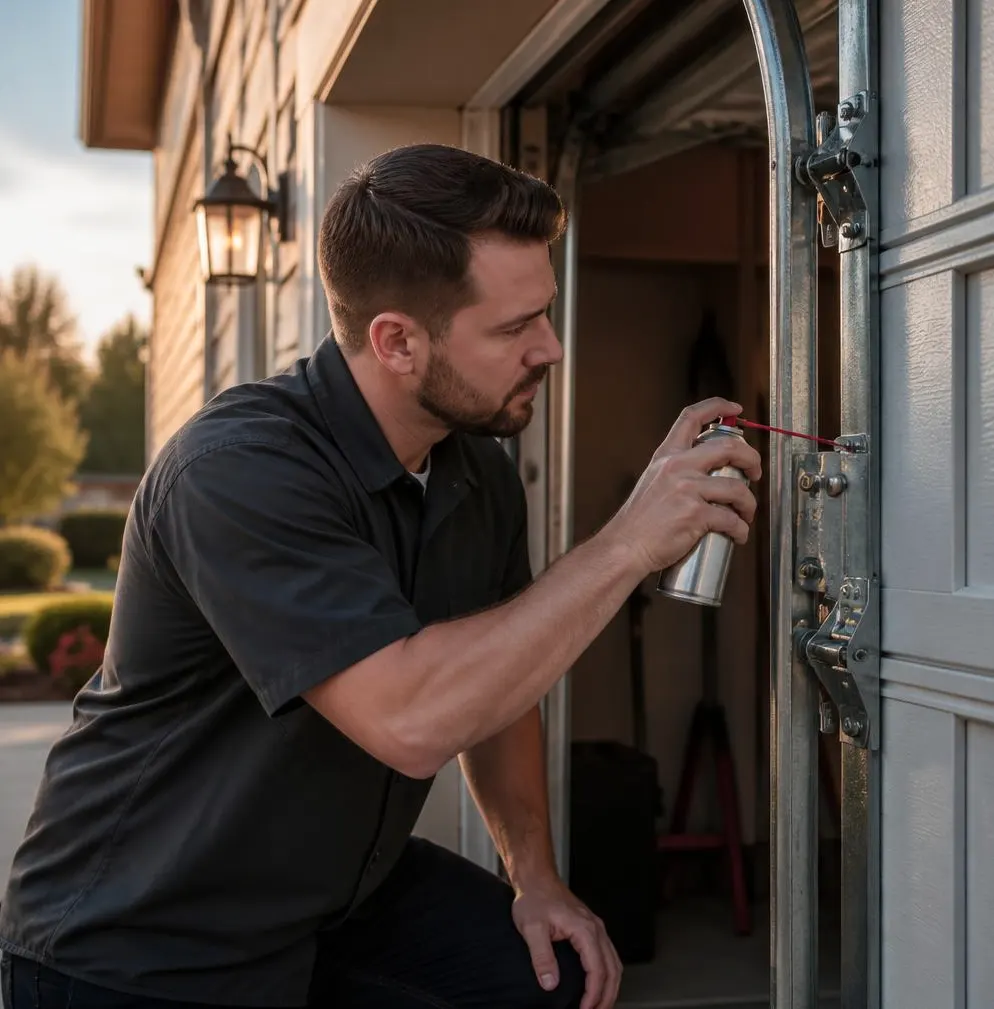
The fix: Clean old lubricant off the track and rollers, then reapply a lubricant rated for cold temperatures. This is part of basic seasonal maintenance and is worth doing before the hard freezes set in, not after.
4. Springs Losing Flexibility in the Cold
Metal contracts in cold weather, and torsion springs are no exception. A spring that's already near the end of its life cycle can become noticeably stiffer or lose tension unevenly when temperatures drop, making the door feel heavier on one side or harder to lift by hand.
The fix: This is not a DIY adjustment. Torsion springs are under serious tension and a technician needs to check the wind and balance. If a spring is cracked, has visibly separated coils, or is clearly original to an older door, cold weather is often what finally reveals that it needs replacing.
5. Opener Settings and Sensors Reacting to Resistance
If the door reverses partway up, or the motor runs but the door doesn't move, the opener's force and limit settings are likely compensating for resistance it's detecting from one of the issues above. Cold can also affect the opener's internal components and occasionally the photo-eye sensors if condensation has formed on the lenses.
The fix: Wipe the sensor lenses, check that they're aligned, and only adjust force settings after the mechanical cause (ice, drag, spring tension) has been fixed. Adjusting force settings to push through a mechanical problem just masks it and wears the opener out faster.
Why This Matters More in a Climate Like Ours
Cold winters with ice, road salt, and big swings between freezing nights and warmer days make freeze-thaw cycling a regular event for garage doors here, not an occasional fluke. Salt brine tracked in from the driveway lowers the melting point of ice right at the door's weak point — the bottom seal — which is why that spot freezes and thaws more than the rest of the slab. A door that's marginal in October often becomes the door that won't open in December.
When to Call Beachwood Garage Door Co
If you've ruled out ice at the base and the door is still sluggish, binding, or reversing, it's time to call. A stiff or unevenly moving door is often a spring problem, and springs are one of the few garage door components that are genuinely dangerous to adjust yourself. Our Spring Replacement service checks the wind, tension, and condition of both springs and replaces them as a pair if one is failing. If the issue turns out to be lubrication, worn rollers, or a seal that's let water in all season, our Garage Door Maintenance visit covers all of it in one trip, timed to get ahead of the hardest part of winter. And if your door is frozen shut with no way in or out of the garage, our Emergency Garage Door Service gets a technician out fast.
If your garage door is sticking, slow, or stuck on cold mornings, call Beachwood Garage Door Co today and let's get it moving again before the next freeze.