
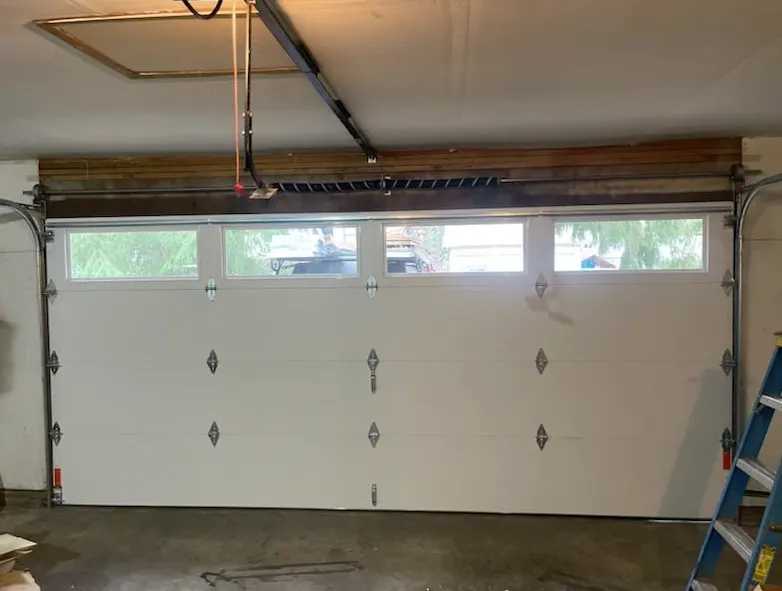
Rule of thumb: if the door opens and closes on the remote during a walkthrough, most general home inspectors mark it as working and move on. That's the exception you need to know about — a home inspector's job covers dozens of systems in a couple of hours, and garage doors get maybe five minutes of attention. A door can cycle just fine on a warm, calm day and still have a spring that's one cold snap from snapping, sensors that don't actually stop the door, or an opener that's older than the roof. None of that shows up on a standard inspection report.
Here's what to check yourself, or ask your inspector to check specifically, before you close.
The Walk-Through Checklist
1. The manual balance test
With the door closed, pull the release cord to disconnect it from the opener, then lift the door by hand about halfway. A properly balanced door stays put on its own. If it drops like it's too heavy, or shoots upward, the springs are worn or mismatched for the door's weight. This is one of the most commonly skipped checks because it requires actually touching the door, not just clicking a remote.
2. Spring condition and rust
Look at the torsion spring above the door (or the two side springs on older setups). Surface rust after years of humid summers and salty, wet winters isn't automatically disqualifying, but flaking rust, visible gaps between coils, or a spring that looks stretched compared to its neighbor is a sign it's near the end of its life. Springs don't give much warning before they fail.
3. Auto-reverse safety sensors
Close the door and wave a broom or roll a ball across the sensor beam near the floor. The door should stop and reverse immediately. If it doesn't, either the sensors are misaligned, dirty, or wired around entirely — a real liability in a house with kids or pets, and a quick fix if caught now.
4. Bottom panel and weatherstripping
Check the bottom few inches of the door panel and the rubber seal along the floor. Chronic exposure to road salt and melting ice in winter causes rust and pitting right at this seam. Cracked or torn weatherstripping lets cold air, water, and small pests into the garage — an easy thing for an inspector to overlook since it's low and often hidden behind stored items.
5. Tracks, rollers, and alignment
Look along both tracks for rust, dents, or gaps where the track has pulled away from the wall. Spin a roller by hand — it should turn smoothly, not grind or wobble. Big temperature swings between summer and winter cause metal to expand and contract, which over years can loosen track bolts.
6. Opener age and type
Find the manufacture date on the opener unit, usually on a sticker inside the housing. Openers over 10–15 years old often lack modern safety features like auto-reverse force limits, and replacement parts get harder to source. Ask whether it's chain-drive (louder) or belt-drive (quieter) — not a safety issue, but worth knowing before move-in.
7. Battery backup and emergency release
Confirm there's a working manual release handle (usually a red cord) in case of power loss, and check whether the opener has a battery backup. Given how often Cleveland-area storms knock out power in spring, this matters more here than in milder climates.
8. Noise and cycle smoothness
Run the door up and down twice. Grinding, slapping, or a hesitation partway through the cycle usually points to worn rollers, a failing opener motor, or a spring doing more work than it should.
When to Call Beachwood Garage Door Co
If the balance test fails, the springs look worn, or the sensors won't reverse the door, don't wait until after you've moved boxes in. Beachwood Garage Door Co can run a full safety inspection, handle spring replacement if the coils are past their usable life, and recalibrate or swap out the opener if the sensors or auto-reverse aren't working correctly. It's a lot cheaper to negotiate a repair credit before closing than to pay for it yourself the week you move in.
If you're buying a home in Beachwood, Shaker Heights, Pepper Pike, or anywhere nearby and want a second set of eyes on the garage door before closing, give Beachwood Garage Door Co a call — we'll tell you honestly what's fine, what's worn, and what needs fixing now.